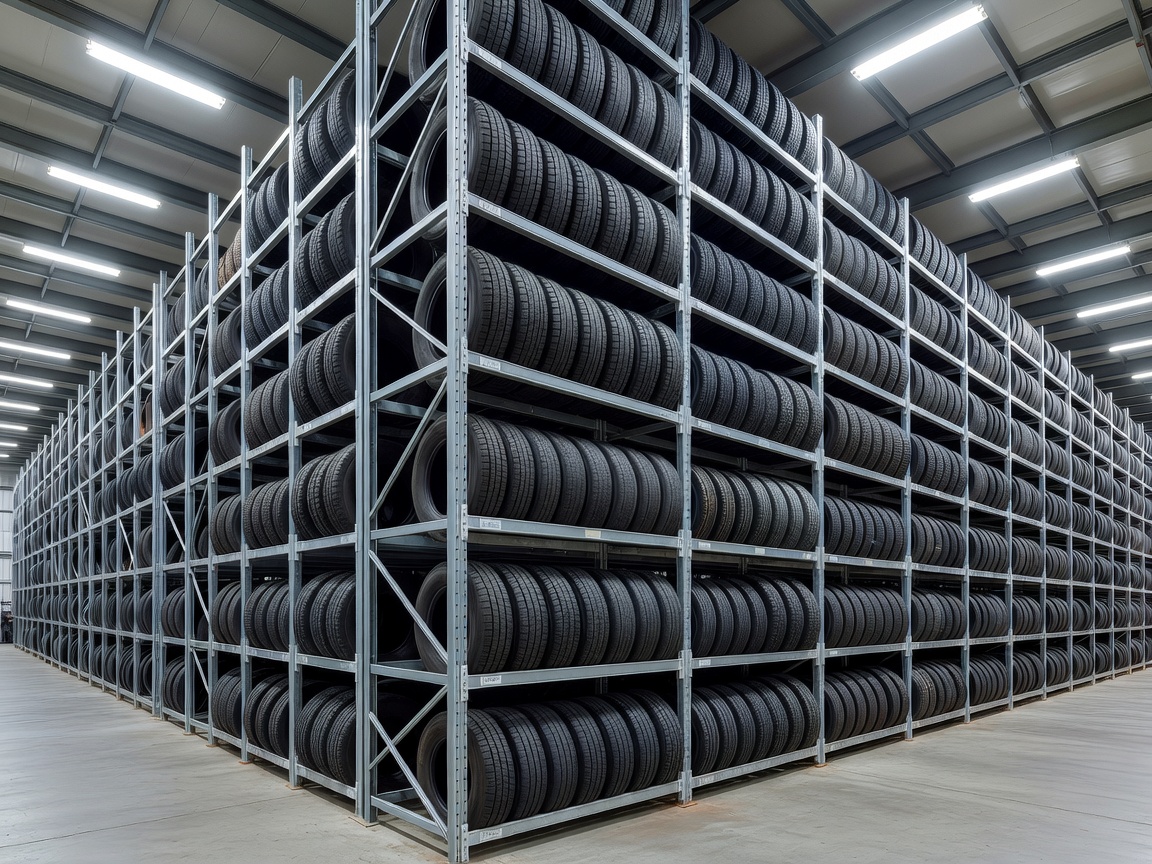
Build the location before filling the rack
Good storage starts with a location structure that reflects how the tires will be retrieved. We prefer zones based on site, season and operational group, followed by rack, level and position. That sequence is more useful than a simple arrival order because it supports the questions people actually ask: which depot owns this set, what vehicle is it associated with, and how quickly can it be released?
Each set should carry a durable identifier that remains readable when the tire is handled. A practical label can connect vehicle or asset reference, axle position where relevant, season, storage date and inspection status. If wheels are stored as a complete set, the set ID should be prominent; individual tire markings can sit underneath it for traceability.
Conditions, handling and inspection
Storage areas should be clean, dry and arranged so tires are not exposed to avoidable heat, direct sunlight, moisture or contact with substances that may affect rubber. The appropriate orientation depends on the tire and wheel configuration, so our process records the chosen handling method rather than assuming every product is stored alike.
At intake, we record visible condition, tread-related observations, damage notes and any issue requiring a decision before release. This is not a substitute for a qualified technical inspection. It is a logistics checkpoint that prevents an obviously questionable set from silently moving into the next appointment.
Two approaches compared
Dense fixed-location storage
Strength: efficient use of space and predictable routes for experienced teams.
Trade-off: errors compound when labels or location discipline weaken.
Flexible floor-zone storage
Strength: easy to adapt during seasonal peaks or changing fleet groups.
Trade-off: requires stronger daily reconciliation and clear temporary locations.
Storage release checklist
- Confirm the set ID against the requested vehicle or fleet group.
- Check location, season and recorded condition.
- Scan or read the label before moving the set.
- Mark the set as picked, reserved or dispatched.
- Leave the location readable for the next operator.